
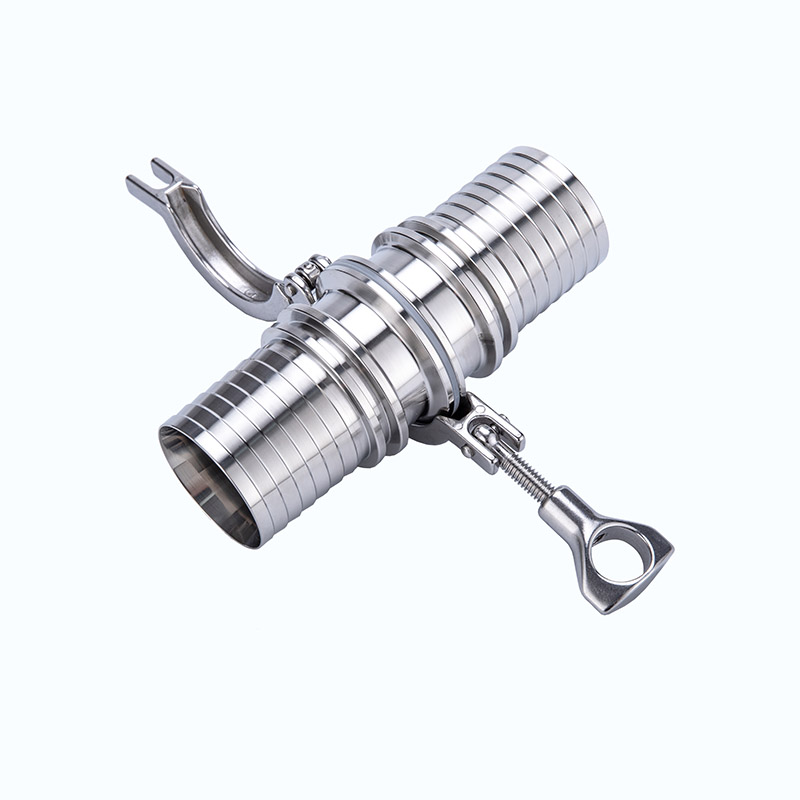
In pharma fluid-transfer design, the “best” fitting isn’t just about connecting hoses quickly—it’s about protecting product purity, surviving aggressive cleaning, and staying reliable across thousands of cycles. The right material choice for your cam-and-groove system directly affects contamination risk, gasket life, and long-term maintenance costs.
If you’re comparing materials or standardizing connection formats, start by understanding the camlock types you’re using (adapters, couplers, dust caps/plugs) and where each one sits in your process: cleanroom transfer, CIP return, solvent lines, or utility rinses.
Why material selection matters in pharma
Pharmaceutical lines face two constant stressors:
Hygiene requirements: surfaces should be smooth, cleanable, and resistant to buildup.
Chemical + thermal exposure: repeated CIP/SIP cycles, hot water, steam, and sanitizers can degrade lesser materials.
That’s why many facilities default to stainless for product-contact and high-temperature zones. Union Metal supplies stainless camlock couplings commonly specified for demanding hygienic environments, where corrosion resistance and surface finish matter.
Stainless steel vs. polypropylene: where each makes sense
Stainless steel (often 316L in pharma)
Best for:
Hot CIP loops and steam-adjacent areas
Product-contact transfers where cleanliness and durability are priorities
Higher pressure and temperature swings
Long service life with consistent sealing
316L is widely preferred in pharmaceutical processing because it holds up well against harsh cleaning chemistry and helps maintain a stable, hygienic internal surface over time.
Polypropylene (PP)
Best for:
Low-temperature rinse lines
Certain chemical-compatible utility uses
Lightweight hose assemblies where cost and handling matter
A practical rule: PP can be excellent in the right place, but it’s not the first choice for hot water/steam exposure or demanding pressure conditions.
Don’t overlook gasket compatibility
In sterile or semi-sterile environments, leaks aren’t just messy—they can be a compliance headache. The fitting material must work together with the gasket material and the fluids you run.
Typical pairings you’ll see in pharma operations:
Silicone: common for aqueous transfers where flexibility and cleanliness are valued
EPDM: often used for general cleaning cycles
Viton (FKM): selected for more aggressive chemicals/solvents (where compatible)
Choosing the right seal is what turns a quick-connect into a dependable connection. Your goal is a consistent, repeatable closure—especially when using a camlock connector on lines that open/close multiple times per shift.
Pressure ratings and safety features to prioritize
For cam-and-groove fittings, pressure capacity varies by size and design, so confirm the rating for your exact configuration. Beyond the printed pressure number, look for features that reduce operator error and accidental disconnects:
Durable cam arms with smooth, even closure
Optional safety pins/locks in higher-risk areas
Stable gasket compression (not “tight sometimes, loose sometimes”)
Clear labeling so teams don’t mix connector styles in clean zones
Cleanroom reality: what actually improves turnaround time
In modular cleanroom workflows, the biggest win is often speed + consistency:
Faster swap of hose assemblies or piping modules
Fewer tools brought into controlled areas
Less time verifying thread engagement
More standardized spare parts across skids
That combination can reduce downtime during batch changeovers and simplify training for new operators.
Maintenance checklist for sterile environments
To keep camlock-style connectors reliable in pharma duty cycles:
Inspect gasket seating and cam-arm condition at every batch change
Replace gaskets on a fixed schedule (or earlier if you see flattening, cracks, swelling, or tackiness)
Close levers evenly—avoid forcing one side down first
Track coupling IDs, service cycles, and cleaning exposure for traceability
Keep a dedicated spare kit (gaskets + pins/arms if applicable) for critical lines
Conclusion
Choosing the right camlock fitting material in pharmaceutical processing is about matching process risk to material performance. Stainless (especially 316L) is typically the go-to for hygienic, high-temp, or high-reliability zones, while polypropylene can be a smart choice for specific low-temp, chemical-compatible utility lines. Pair the right material with the right gasket, standardize your cam-and-groove fitting types, and your transfers stay cleaner, safer, and more repeatable—batch after batch.


Leave A Comment